# OpenClaw 2.0 vs GoKapow: Agent Harness or Managed AI Workforce?
OpenClaw 2.0 is a meaningful release for teams that want a capable AI runtime they can operate and extend themselves. Published as OpenClaw v2026.8.1 on 31 August 2026, the release adds improvements across searchable history, sessions, progress visibility, approvals, credentials, memory, continuity, and provider and plugin controls. Those changes make an agent easier to use and govern. They do not, by themselves, answer a larger operational question: should your team run an agent, or coordinate a workforce of specialized AI workers?
The short answer is:
- Choose OpenClaw 2.0 when you need a self-hosted, extensible gateway for conversations, channels, tools, and sessions.
- Choose GoKapow when work must be decomposed across specialized workers, handed off through dependencies, reviewed at approval gates, and preserved as durable outputs and decisions.
- Consider both layers when an agent runtime is useful inside a broader, accountable workflow.
That distinction matters because "AI agent platform" can describe two different jobs. One job is giving an agent a reliable place to operate. The other is managing a multi-step process in which several workers contribute, evidence is retained, and a person can intervene before the next consequential action.
## What is OpenClaw 2.0?
OpenClaw 2.0 is the label used for OpenClaw v2026.8.1 in the official release documentation. OpenClaw is a self-hosted, extensible runtime and gateway for conversations, channels, tools, and sessions. In practical terms, it connects an agent experience to the systems and interfaces where work happens.
The [official release notes](https://github.com/openclaw/openclaw/releases/tag/v2026.8.1) describe searchable conversation history, cloud or paired-device sessions, durable visibility into work progress, approvals, credential handling, memory and continuity improvements, and broader provider and plugin controls. The [official release index](https://docs.openclaw.ai/releases) also highlights a rebuilt web experience, onboarding, memory, continuity, and reliability work.
These changes address common friction in agent use. Searchable history helps people find earlier work. Cloud or paired-device sessions make access more flexible. Persistent progress makes long-running work easier to understand. Approval and credential controls provide stronger boundaries around sensitive actions. Memory and continuity improvements help an agent remain useful across interactions instead of treating every request as isolated.
The [main-session documentation](https://docs.openclaw.ai/concepts/main-session) explains the gateway and session model that supports continuity. This is a strong foundation for personal automation, technical experimentation, and teams that want control over deployment and extension.
## What does OpenClaw 2.0 do well?
OpenClaw 2.0 is a good fit when the central problem is operating an agent reliably in a self-hosted environment. A technical team may want an assistant that interacts with selected channels, calls tools, retains relevant session context, and extends through plugins or provider integrations. A team that values control over its runtime, infrastructure, and customization may prefer this model to a fully managed application.
It is also a sensible choice when work centers on one ongoing agent relationship. Searchable history and continuity help users return to previous context. Paired-device or cloud sessions can make access more practical. Progress visibility and approvals reduce the black-box feeling that can make agents difficult to trust.
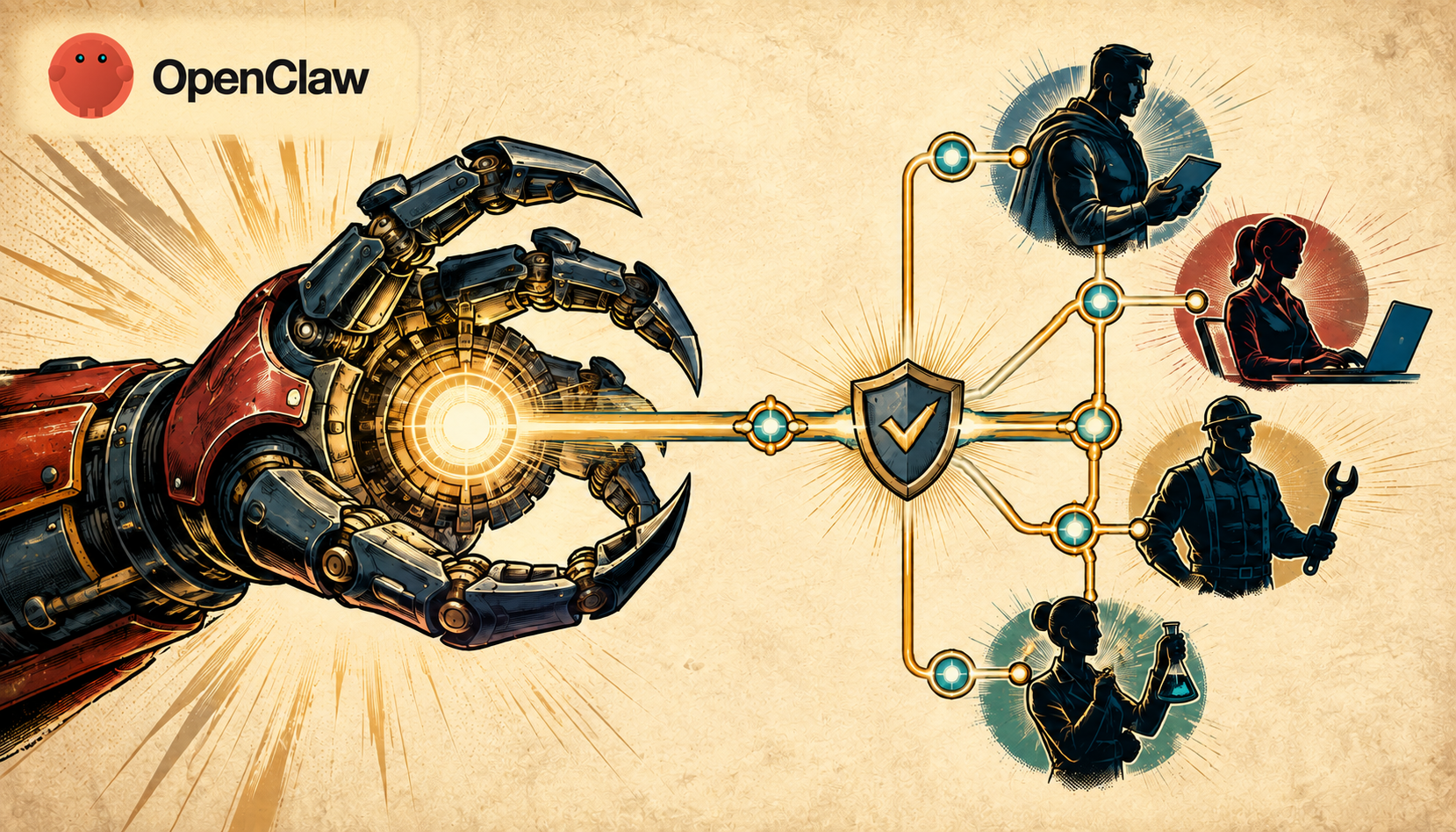
OpenClaw can therefore serve as an agent harness: the operating layer that gives an agent access to conversations, tools, sessions, and integrations. That does not make it lesser than an orchestration platform. It means the design center is different. The harness helps an agent operate; the orchestration layer helps an organization run a process.
## Where does an agent harness stop being enough?
A runtime can make one agent more capable while leaving the surrounding business process largely implicit. That becomes a problem when work has multiple owners, distinct specialties, dependencies, or review requirements.
Consider a research-to-publication workflow:
1. A researcher gathers source evidence.
2. An analyst checks claims and identifies a search opportunity.
3. A writer produces the draft.
4. An editor reviews accuracy and voice.
5. A publisher handles the approved CMS action.
A single conversational agent may be able to attempt every step. The operational challenge is knowing which step is complete, what evidence supports it, what should happen next, and where a human must approve. Without explicit handoffs and durable records, the process can be difficult to audit, resume, or transfer to another person.
This is the difference between "the agent can do it" and "the organization can run it." The first is a capability question. The second is a workflow, accountability, and repeatability question.
## OpenClaw 2.0 vs GoKapow: the practical difference
GoKapow is built around AI-worker orchestration. Its focus is not only giving an agent tools, but coordinating specialized workers across a controlled task system. The [GoKapow homepage](https://gokapow.com/) describes AI-worker orchestration, specialized workers, dependencies, approvals, operational memory, credential and session controls, and local or cloud model routing.
| Need | OpenClaw 2.0 | GoKapow |
|---|---|---|
| Primary unit | Agent, conversation, channel, session | Task, worker, dependency, deliverable |
| Best fit | Self-hosted agent runtime and extensibility | Repeatable multi-step workflows |
| Specialization | Extensions, providers, and plugins | Dedicated workers with explicit roles |
| Handoffs | Session and conversation continuity | Dependency-driven transitions |
| Review | Runtime approvals for selected actions | Approval gates in the workflow |
| Record of work | Searchable history and session context | Durable outputs, decisions, and evidence |
| Memory | Agent and session continuity | Operational memory across work |
| Credentials | Credential handling within the runtime | Controlled credential and session access |
| Deployment model | Self-hosted gateway and runtime | Managed orchestration with routing options |
This table is a decision aid, not a claim that the products are interchangeable. OpenClaw's strength is the runtime layer. GoKapow's strength is the coordination layer.
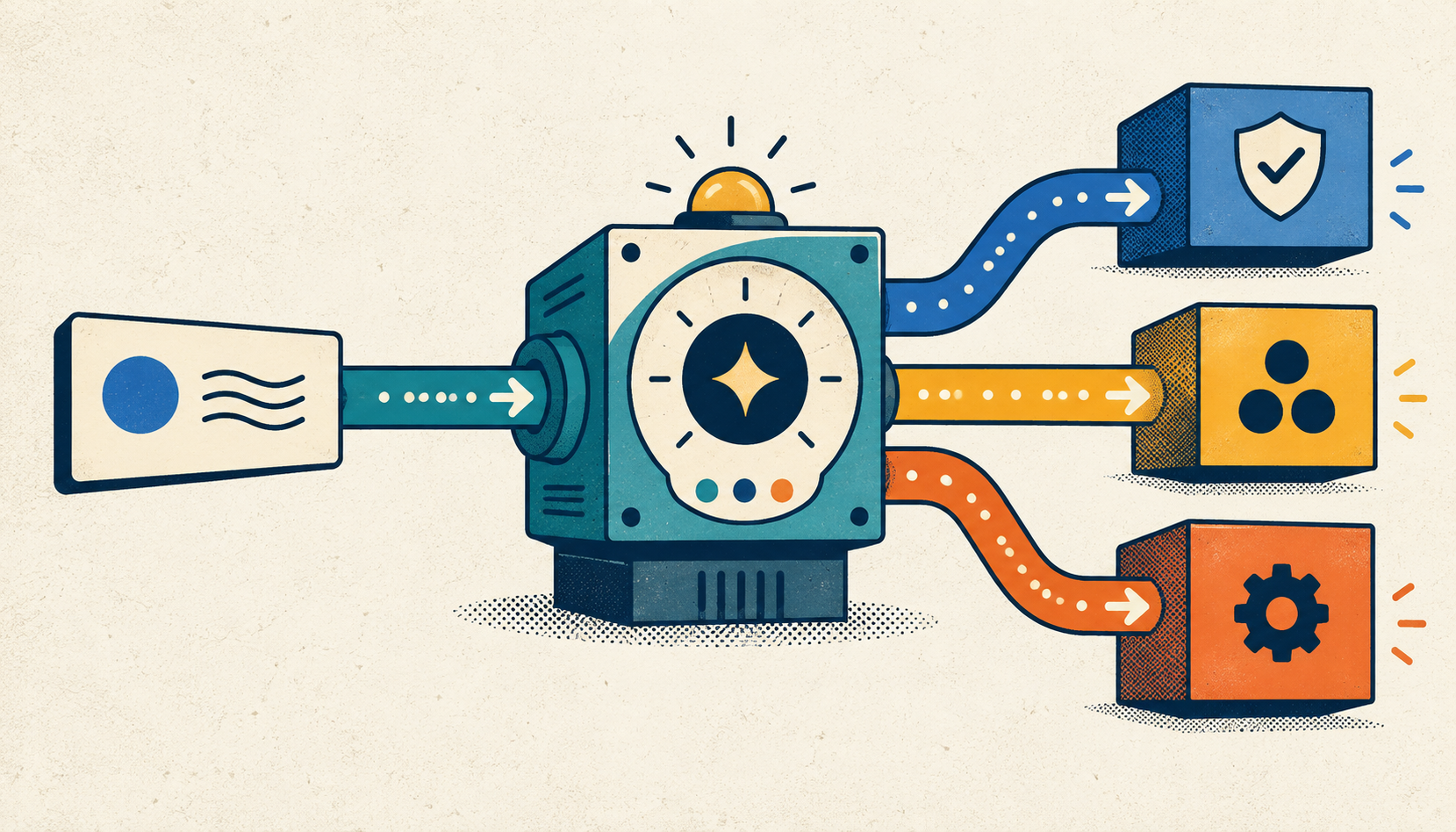
In GoKapow, an orchestrator can break a goal into tasks, route each task to a suitable worker, enforce dependencies, and stop for approval before an external or consequential action. The result can include durable outputs, decisions, and evidence that another worker or person can use. That structure is valuable when the workflow must survive interruptions, explain how a result was produced, or make ownership visible.
## How should a team choose?
Choose OpenClaw 2.0 when most of these statements are true:
- You want to host and control the agent runtime yourself.
- Your primary experience is conversational or session-based.
- You need integrations with channels, tools, providers, or plugins.
- One agent can complete the work with limited coordination.
- Your team is comfortable owning deployment, configuration, and operational controls.
- The most valuable continuity is continuity within an agent relationship.
Choose GoKapow when most of these statements are true:
- The goal must be split into distinct tasks or specialties.
- One worker's output should become another worker's explicit input.
- Work needs approval gates before publication, messaging, or other consequential actions.
- You need durable artifacts, decisions, and evidence rather than only a conversation transcript.
- A team must resume work after a handoff, interruption, or model failure.
- You want operational memory that supports repeatable work across tasks.
The size of the model is not the deciding factor. A powerful agent can still be the wrong operational unit if nobody can tell which claims were checked, which actions were authorized, or who owns the next step. Conversely, an orchestration system is unnecessary overhead for a small, personal workflow that one operator can safely inspect end to end.
## A useful evaluation framework
Before selecting a platform, map one real workflow from request to finished result. List the work units, required skills, dependencies, evidence, credentials, approval points, and final outputs. Then ask five questions.
First, can the system show the current state of each work unit? Second, can a different worker or person continue without reconstructing the entire history? Third, can the team distinguish source-backed facts from generated recommendations? Fourth, are external actions gated and attributable? Fifth, can the organization measure quality, time, cost, and rework across repeated runs?
If the answers center on one agent's access to tools and continuity, OpenClaw may be the better starting point. If the answers center on coordination and accountability across several roles, GoKapow is closer to the problem. If both sets matter, use the runtime where it adds value and put it inside a workflow with explicit controls.
## FAQ
### Is OpenClaw 2.0 an orchestration platform?
OpenClaw 2.0 is best described here as a self-hosted, extensible runtime and gateway for agents, conversations, channels, tools, and sessions. It can support sophisticated work, but GoKapow is designed specifically around orchestrating specialized workers, dependencies, approvals, and durable task outputs.
### Is GoKapow a replacement for OpenClaw?
Not necessarily. They address different layers. OpenClaw can provide an agent runtime, while GoKapow can coordinate workers and workflow state. The right choice depends on whether the main need is agent operation, multi-worker accountability, or both.
### Which platform is better for teams?
For a team operating a shared, multi-step process, explicit tasks, handoffs, approvals, and durable evidence are often more important than a single agent's conversational capability. For a team that primarily needs a customizable self-hosted assistant, OpenClaw 2.0 may be the more direct fit.
### Was OpenClaw the first agentic AI platform?
The available sources support describing OpenClaw as a self-hosted extensible runtime and gateway and support the features in the v2026.8.1 release. They do not establish the unsupported claim that it was literally the first or pioneering agentic AI platform. This article avoids that claim.
## Bottom line
OpenClaw 2.0 improves the experience of running an extensible agent. Its release is relevant for teams that want better history, sessions, progress visibility, approvals, credentials, memory, continuity, and controls in a self-hosted environment.
GoKapow addresses a different question: how to organize AI work across specialized workers with explicit dependencies, approval gates, durable outputs, operational memory, and controlled execution. Pick the layer that matches the problem. If the work is mainly an agent relationship, start with the harness. If it is a repeatable process involving several roles and accountable handoffs, use orchestration. The strongest architecture may combine both, provided responsibilities and approvals remain clear.